Table of Contents
- The "Optimization Gap" Penalty
- How the Math Can Work Against a Low-Data Filing
- The Real Cost of Missing the Filing Window
- The Assessment Multiplier: Why an Inflated Value Matters
- The True Price of Passive Ownership
- The Strategic Pivot: Stop Leaving Appeal Value Unclaimed
- Stop Letting the Deadline Decide for You
- 💡 Trivia Time: Why Does the Deadline Matter?
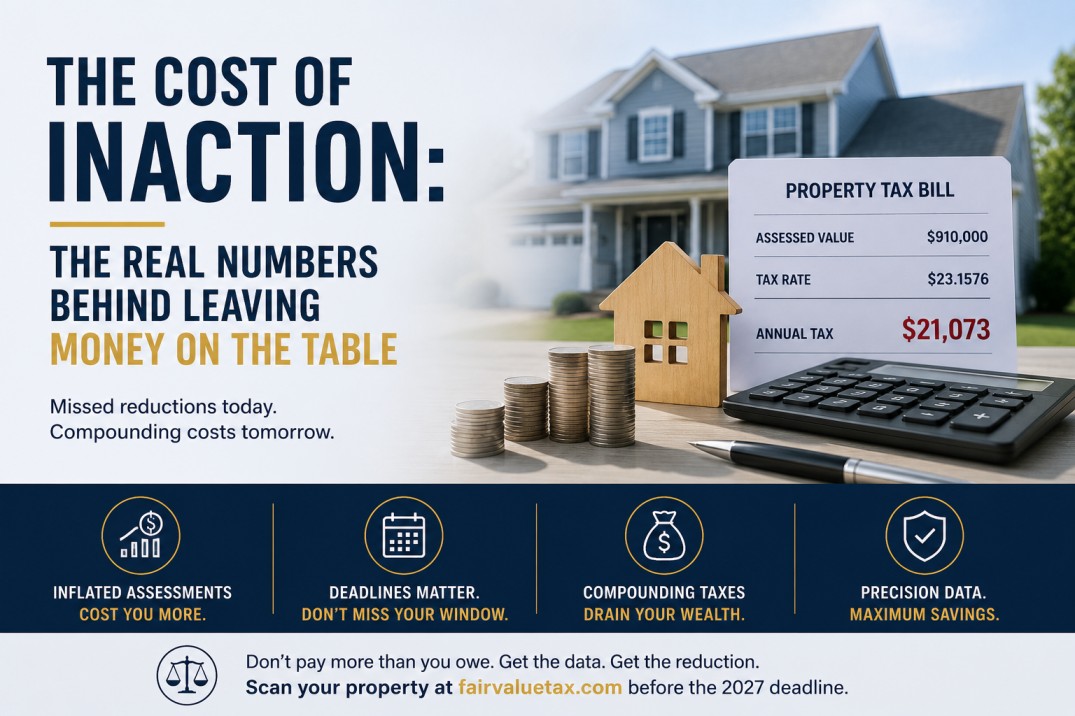
In Nassau County, the property tax grievance deadline is not merely an administrative date on the calendar. It is the cutoff for challenging the tentative assessment roll for that filing year.
If you miss the deadline, you generally lose the opportunity to seek administrative and judicial review of that year’s assessment. In other words, a homeowner who waits too long may be forced to live with the county’s published value for that roll, even if stronger evidence could have supported a reduction.
That is why inaction can be expensive.
The risk is not simply “failing to file.” It is failing to test whether the county’s current assessment is still fair, supportable, and aligned with the strongest comparable evidence available.
The "Optimization Gap" Penalty
Many homeowners believe that any reduction is a victory.
If they secure a minor 2% assessment reduction, they may conclude that the grievance process worked well enough. But that mindset can hide a much larger problem: the Optimization Gap.
The Optimization Gap is the difference between:
- the reduction a homeowner actually receives, and
- the larger reduction that stronger local evidence may have supported.
For example, if same-street or highly comparable peer data indicates that a property is materially over-assessed, but the filing relies on weak or generic support, the homeowner may leave meaningful savings unrecovered.
How the Math Can Work Against a Low-Data Filing
Consider this illustrative example:
| Metric | Passive / Low-Data Filing | Precision Equity Review |
|---|---|---|
| Potential Over-Assessment Identified | 2% | 13.5% |
| Estimated Annual Tax Reduction | $320 | $2,160 |
| Unrecovered Savings Opportunity | $1,840 | $0 |
Note: These figures are illustrative. Actual savings depend on the property’s assessed value, applicable tax rates, and the evidence accepted in the appeal process.
The point is not that every homeowner is entitled to a 13.5% reduction. The point is that weak analysis can lead to weak outcomes.
When stronger comparable evidence exists but is not identified or presented, the homeowner may settle for far less than the data could reasonably support.
The Real Cost of Missing the Filing Window
A missed filing deadline creates a different kind of loss.
Under New York assessment grievance rules, only the current tentative assessment roll can be challenged. If the deadline passes, the homeowner loses that year’s opportunity to contest the published assessment through the ordinary grievance process.
That matters because Nassau’s assessment values can remain relatively stable from roll to roll. If a homeowner’s current baseline is too high relative to comparable properties, failing to file means that potential inequity goes unchallenged for that cycle.
The result may be:
- no review,
- no reduction,
- and no chance to recover savings tied to that assessment year.
The cost of inaction is not theoretical. It is the value of an appeal opportunity that expires.
The Assessment Multiplier: Why an Inflated Value Matters
Many homeowners view their assessment as a static number. In reality, it is one of the central inputs used to calculate property taxes.
A simplified tax relationship is:
In Nassau County, tax rates are commonly expressed per $100 of assessed value and vary by school district, town, village, and special district.
That means an inflated assessment increases the amount of taxable value exposed to those rates for the roll in question.
Even if the homeowner cannot control school budgets or municipal levies, they can challenge whether the assessment base being multiplied is correct.
Why this matters
If your assessment is too high:
- the same tax rate produces a higher bill,
- a weak filing may recover less than the evidence supports,
- and a missed deadline means no grievance opportunity for that roll.
A lower, well-supported assessment does not eliminate future tax changes. But it can reduce the taxable base applied to the relevant year’s rates.
The True Price of Passive Ownership
Suppose an $800,000 Nassau property may reasonably support a 5% assessment reduction based on strong comparable evidence.
If that opportunity translates to roughly $1,200 in annual tax savings, failing to review or challenge the roll is not a trivial oversight. It is a meaningful missed financial opportunity.
Homeowners routinely examine:
- mortgage rates,
- insurance premiums,
- utility bills,
- and major household expenses.
A property assessment deserves the same scrutiny.
The county’s tentative roll should not be treated as automatically correct simply because it arrives in official form. It should be reviewed against relevant evidence.
The Strategic Pivot: Stop Leaving Appeal Value Unclaimed
You do not need to be a tax attorney to understand the core issue.
You need a clear evidence baseline.
A stronger grievance strategy asks:
- Is the county’s value high relative to closely comparable properties?
- Are same-street or same-block peers assessed lower?
- Does the appeal package isolate the strongest evidence rather than relying on generic averages?
- Is the filing submitted before the applicable deadline?
FairValue AI is designed to help answer those questions.
Our system audits more than 340,000 Nassau County property records to identify:
- same-street assessment disparities,
- Section-Block-Lot anomalies,
- peer-group valuation gaps,
- and evidence patterns that may support a stronger appeal narrative.
The goal is not simply to file.
The goal is to file with precision.
Stop Letting the Deadline Decide for You
A property tax grievance is optional.
But once the deadline passes, the opportunity is gone for that roll.
If your assessment is fair, a data review can confirm it. If it is not, the same review may reveal evidence worth acting on before the filing window closes.
Scan your property address at fairvaluetax.com to review your assessment against relevant Nassau County peer data and identify potential savings opportunities before the next grievance deadline.
💡 Trivia Time: Why Does the Deadline Matter?
Nassau County’s Assessment Review Commission accepts grievances only during a defined annual filing period. Under New York State guidance, Nassau complaints must be filed by the applicable deadline, and only the current tentative roll can be challenged.
If a homeowner misses the filing window, they generally lose the opportunity for administrative and judicial review of that year’s assessment.
That is why the deadline matters: it is not merely paperwork timing. It determines whether the homeowner gets to challenge the assessment at all for that roll.